
BUILDING THE MISSING CAPABILITY
THE PURPOSE
Find what is true.
Preserve it.
Make it visible.
Make it auditable.
Make it harder to capture.
Build systems in which evidence and reasoning remain available for anyone to inspect, challenge, correct, and expand.
No one gets to own your relationship with reality.
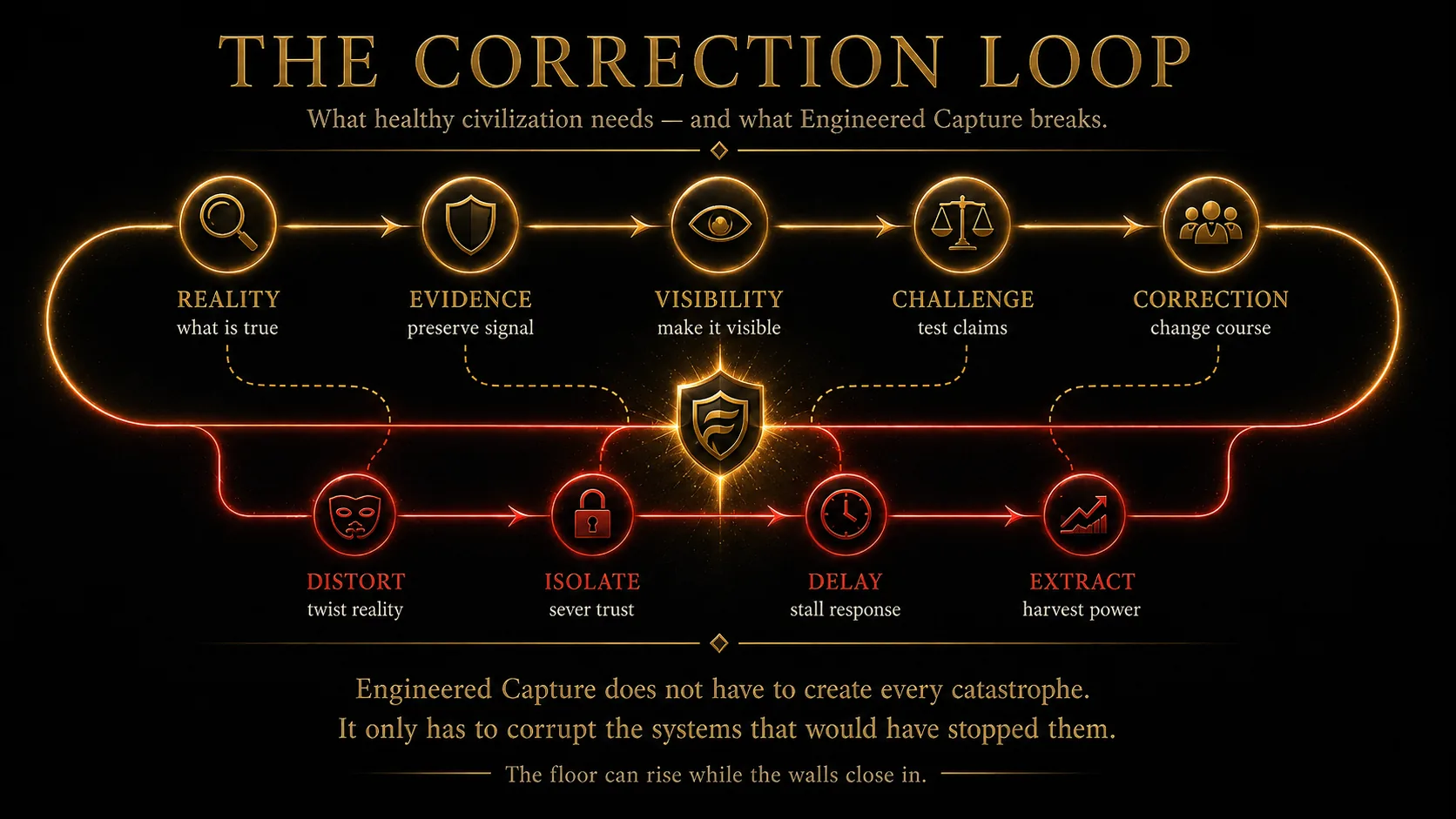
THE PROBLEM
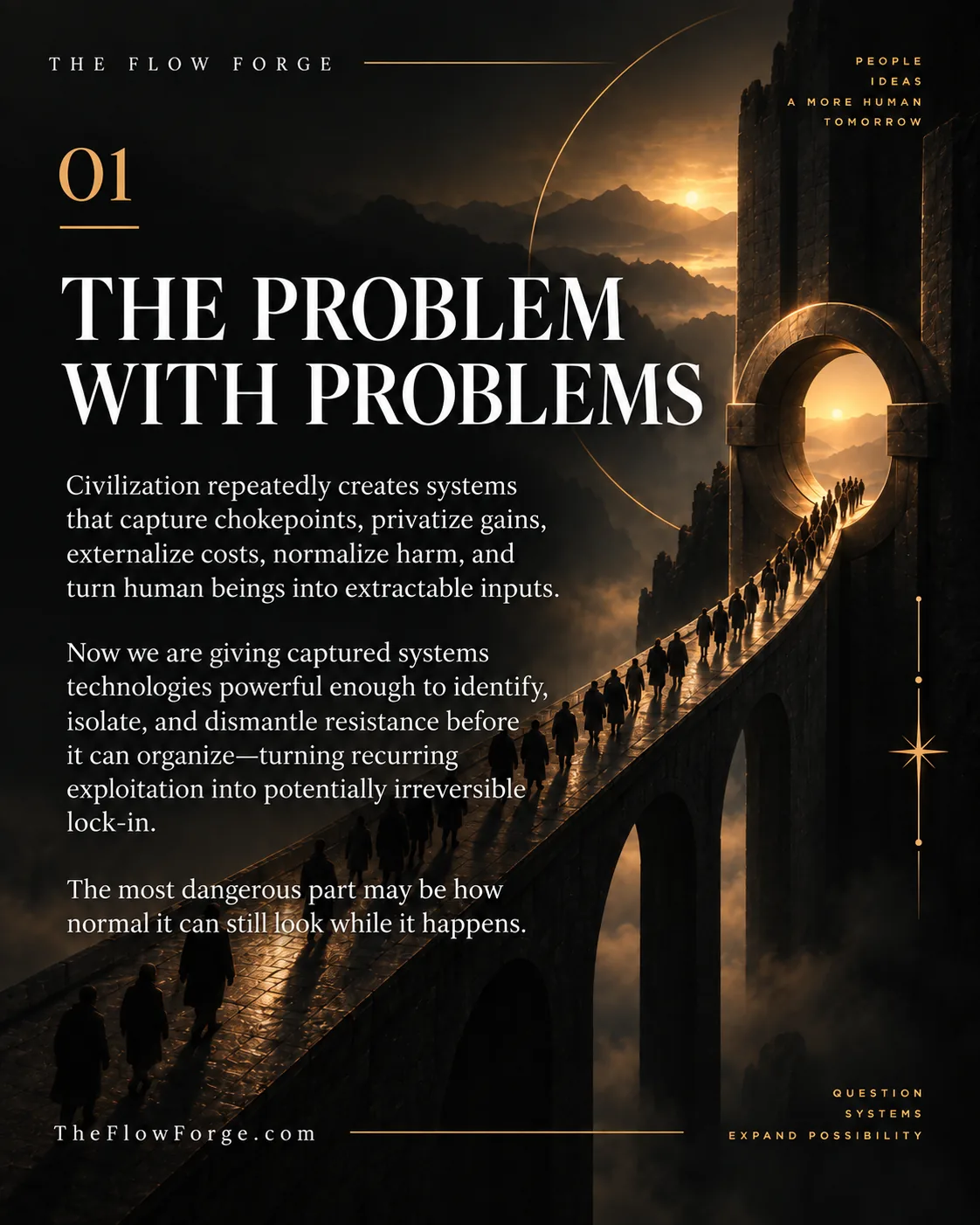
Civilization has never reliably solved one of its oldest problems:
Concentrated power repeatedly becomes exploitative, the systems meant to correct it repeatedly fail, and ordinary people repeatedly realize how bad things have become only after enormous damage has already been done.
This is not an occasional glitch.
Engineered Capture is a recurring, first-order mechanism by which concentrated power turns dependency and chokepoints into extraction, protects that extraction through perception management and impaired correction, and can persist even as societies become materially richer.
The floor can rise while the walls close in.
ONE THING BEFORE WE GO FURTHER
This is not an argument for despair, revolution, or tearing civilization down.
The way through may be far smaller—and far more practical—than the problem suggests.
This is not an argument against wealth, markets, ownership, ambition, or extraordinary success—and no one is being asked to apologize for succeeding inside the world they inherited.
The opportunity is to make success more durable—and create far more of it—not punish the people who have already achieved it.
Almost everything worth preserving can be preserved. And the first move is surprisingly simple.
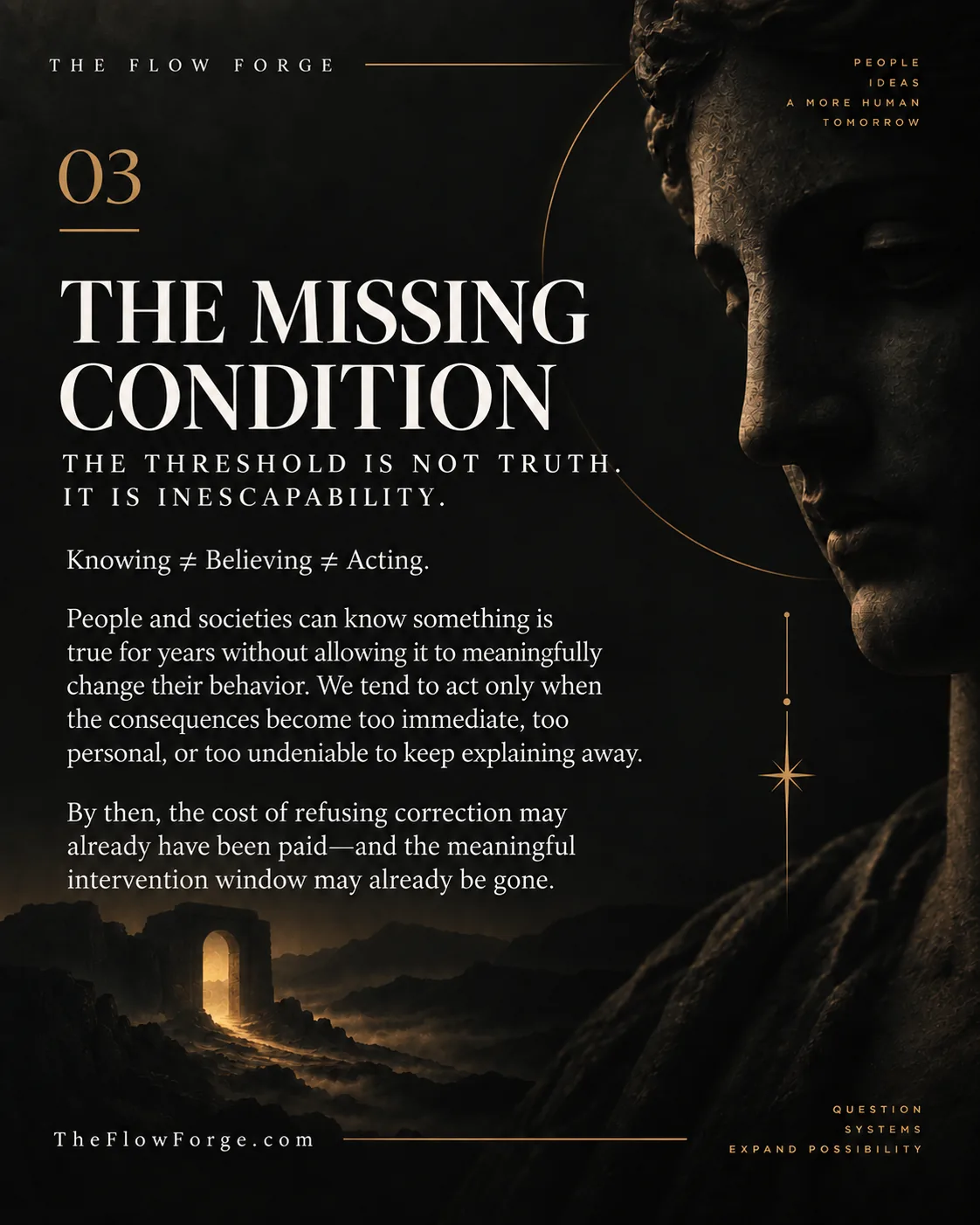
But to understand why it could work, we first have to see what is preventing correction now.
AT A GLANCE
THE WHOLE ARGUMENT IN FIVE MINUTES
SWIPE OR USE THE ARROWS

START HERE
SEE THE PATTERN. FOLLOW THE ARGUMENT.
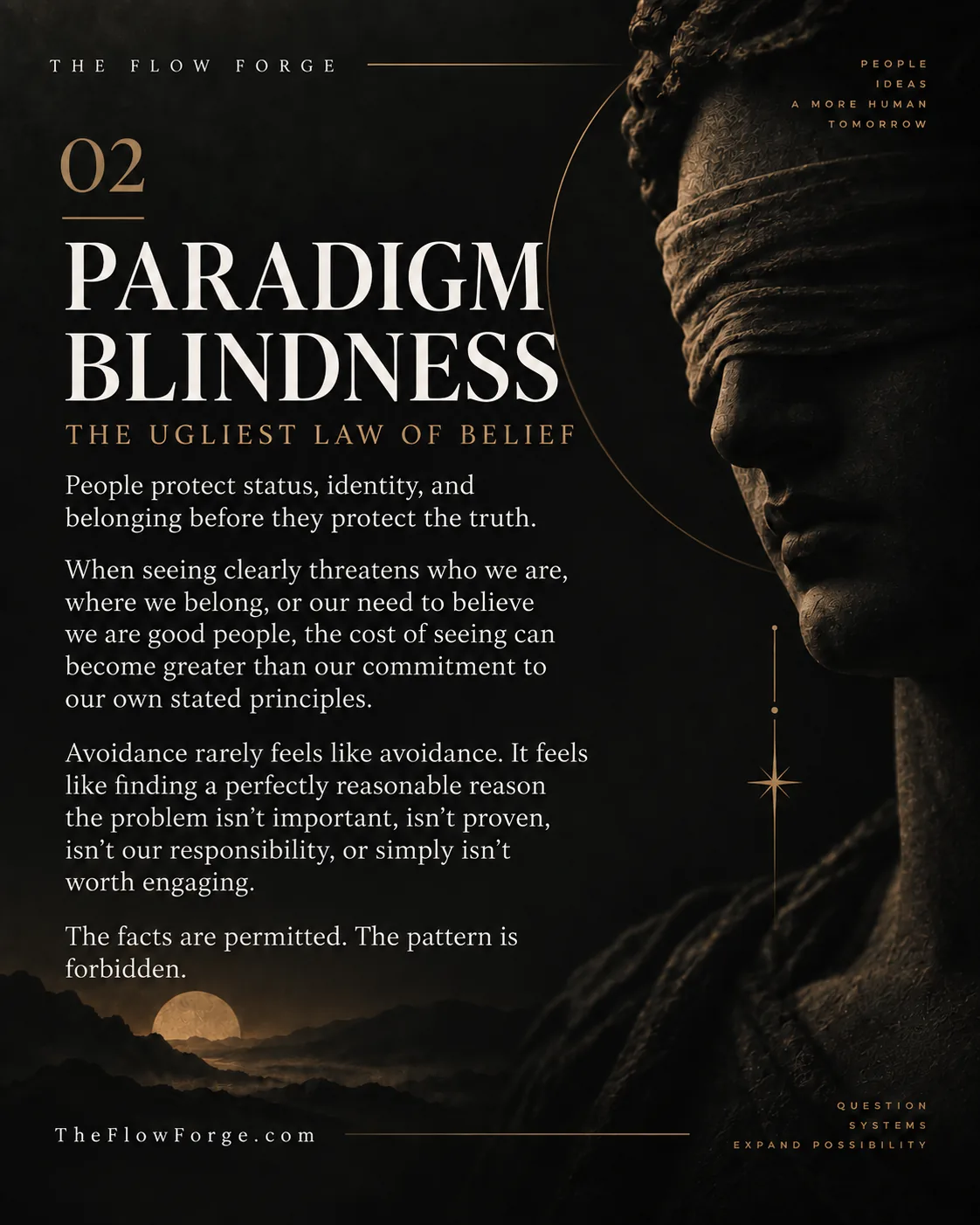
The short version ends here. The deeper case begins with why intelligent people can possess the facts—and still fail to see what those facts mean.